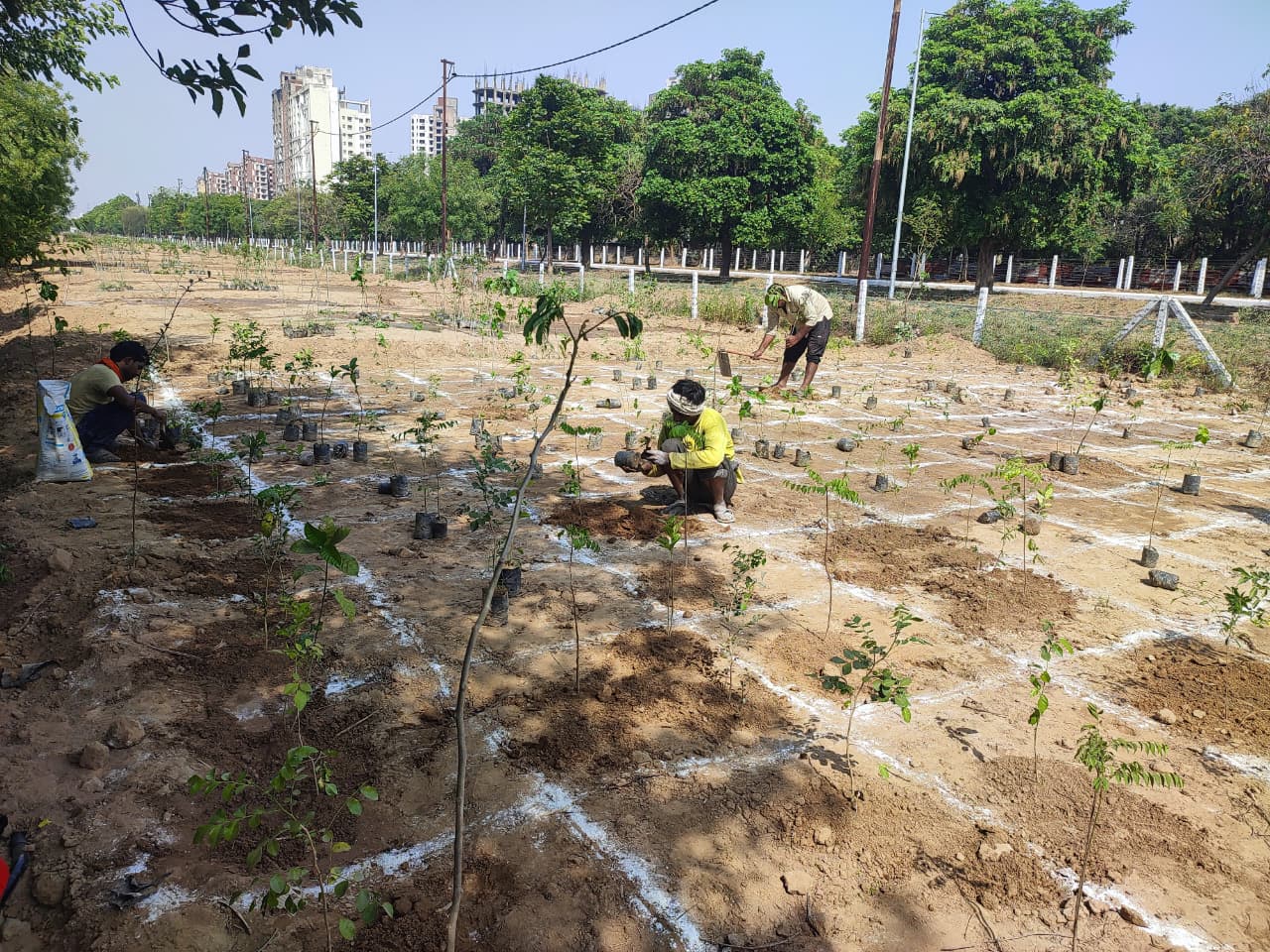
Site preparation
Soil testing, micro-climate mapping, and deep tilling with bio-fertilizers.
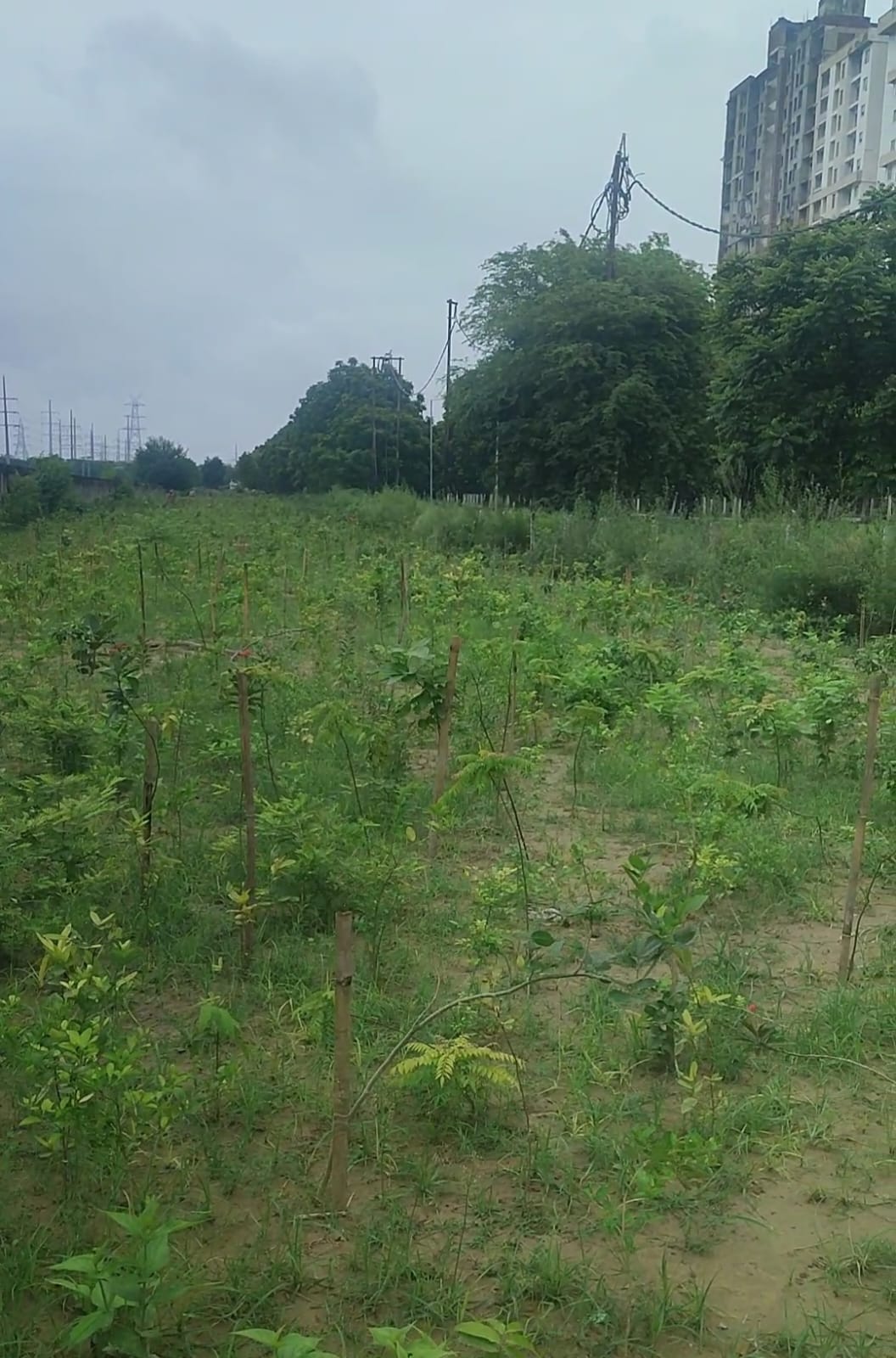
Four acres of barren land in Greater Noida transformed into a dense carbon sink for the industrial township.
The Problem
Sector 16A in Greater Noida was a neglected, barren industrial-edge site. Without tree cover or vegetation, the area suffered from severe soil degradation, excessive heat buildup, and dust-storm effects that impacted nearby neighborhoods. The community and surrounding environments lacked access to a dense green lung to filter industrial emissions.
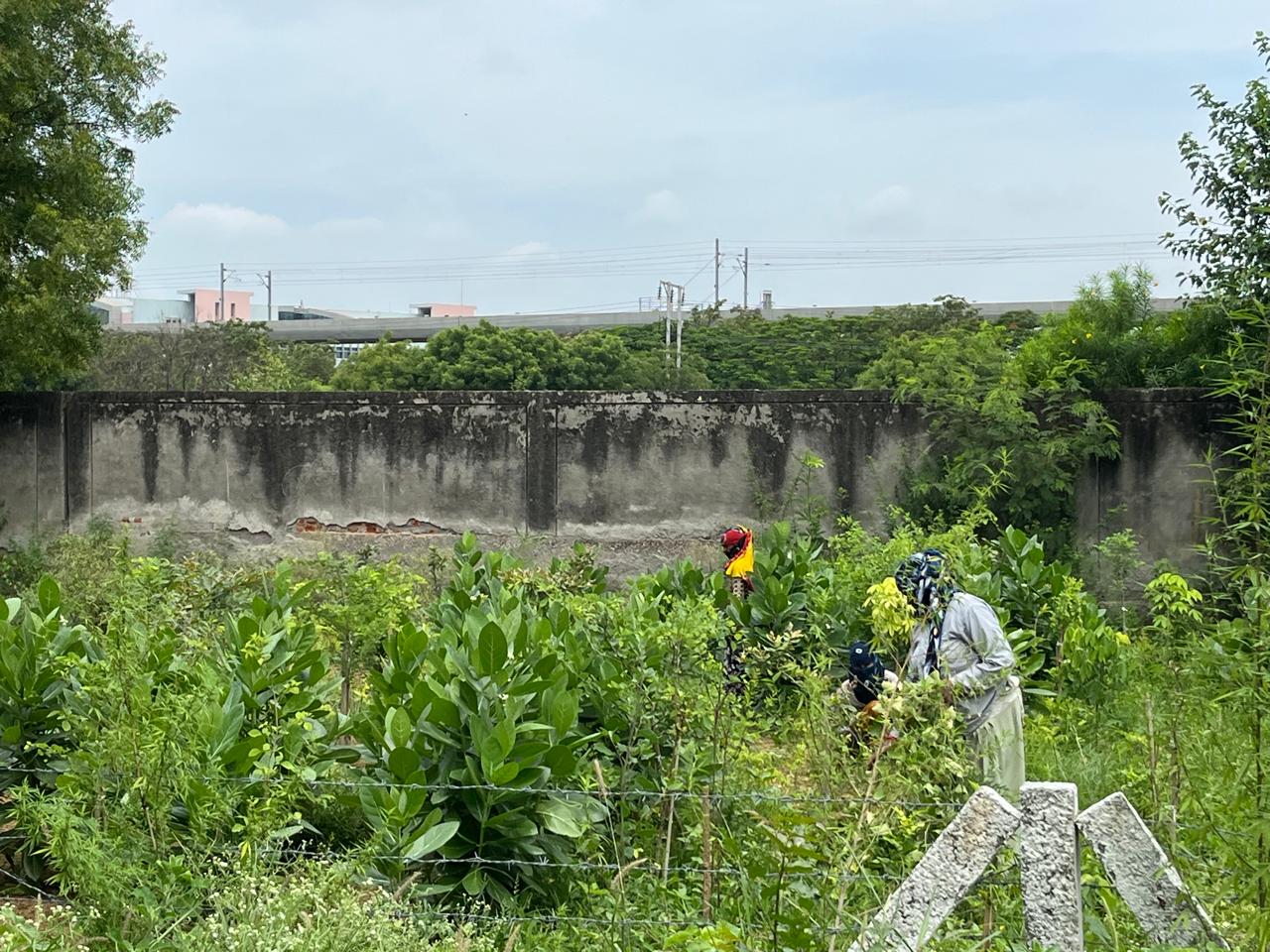
What We Are Doing
We partnered with the Greater Noida Industrial Development Authority (GNIDA) to design and execute a high-density Miyawaki urban forest. By selecting a multi-layered native planting palette and restoring the soil, we enabled a rapid ecological transition.
Soil testing, micro-climate mapping, and deep tilling with bio-fertilizers.
Miyawaki guild selection, irrigation layout, and biodiversity spacing.
High-density planting, organic mulching, and initial water locking.
Regular maintenance, drip irrigation, and quarterly survival audits.
Our approach goes beyond cosmetic plantations. We restore soil biology before planting a layered mix of canopy trees, sub-canopy trees, and ground shrubs to mirror natural forest structures.
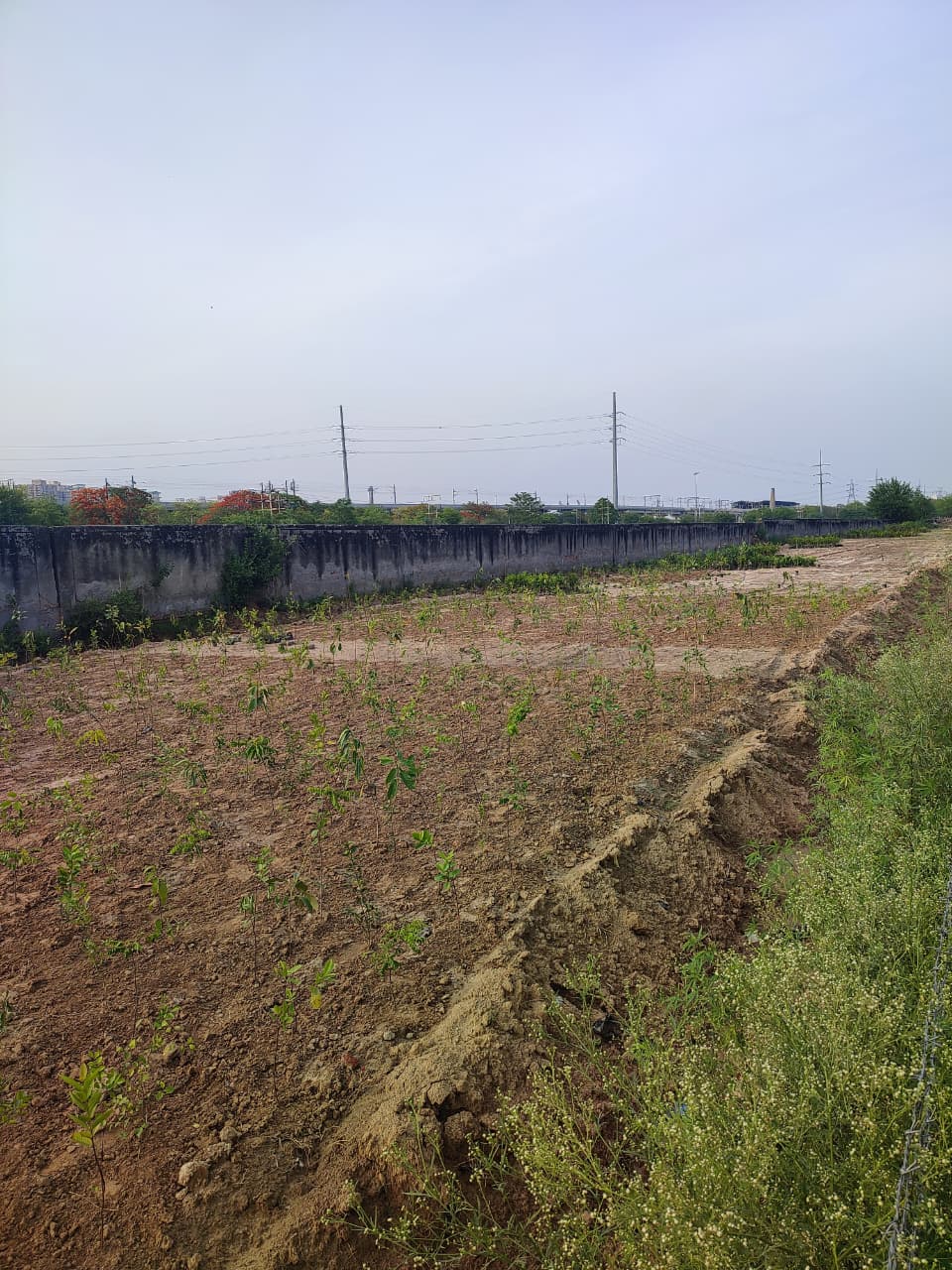
Current Status & Impact
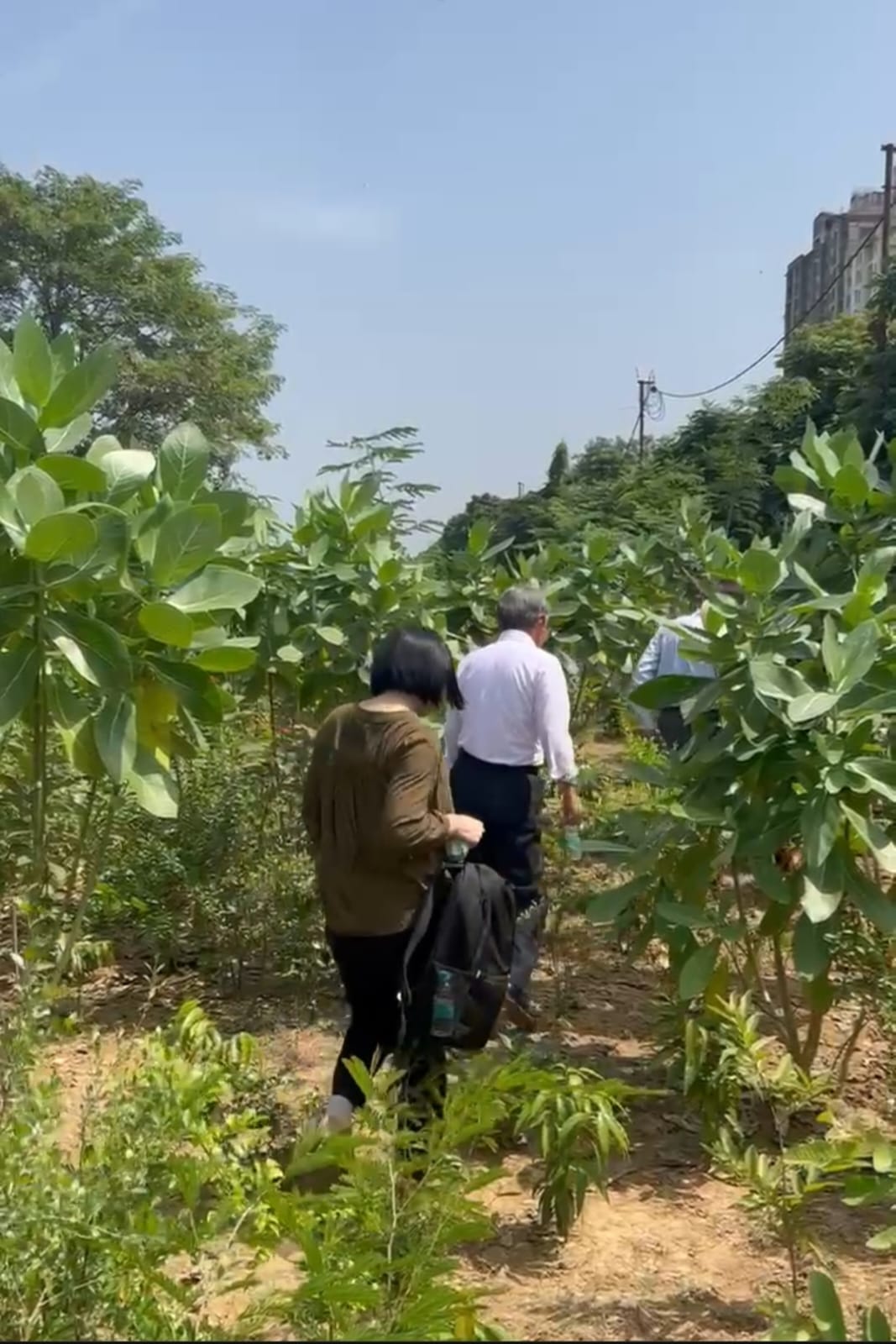
Today, the GNIDA Miyawaki Forest is a thriving local ecosystem in its active growth and maintenance phase. It acts as a living laboratory for schools, local residents, and environmental students.
densely planted with 35+ native species.
first-year survival thanks to automated irrigation.
estimated carbon capture (tCO₂e) over 20 years.
citizens engaged through awareness walks.
Gallery